Maximizing Online Survey Response Rates: Digital Strategies for Success
Online surveys have become the predominant method for gathering insights directly from target audiences, offering unprecedented reach and efficiency. However, in today's digital landscape where attention spans are shorter and inbox competition is fierce, securing complete responses presents unique challenges. Many participants abandon surveys midway, while others never open the invitation email.
This guide explores proven strategies to maximize online survey response rates, ensuring you collect robust and representative data in the digital environment.
Understanding Digital Survey Participation
The digital context introduces specific considerations for survey participation. Respondents evaluate the perceived effort against potential benefits while juggling multiple digital demands for their attention. Their willingness to participate often depends on the survey's accessibility, mobile optimization, and perceived value.
Digital-First Strategy Implementation
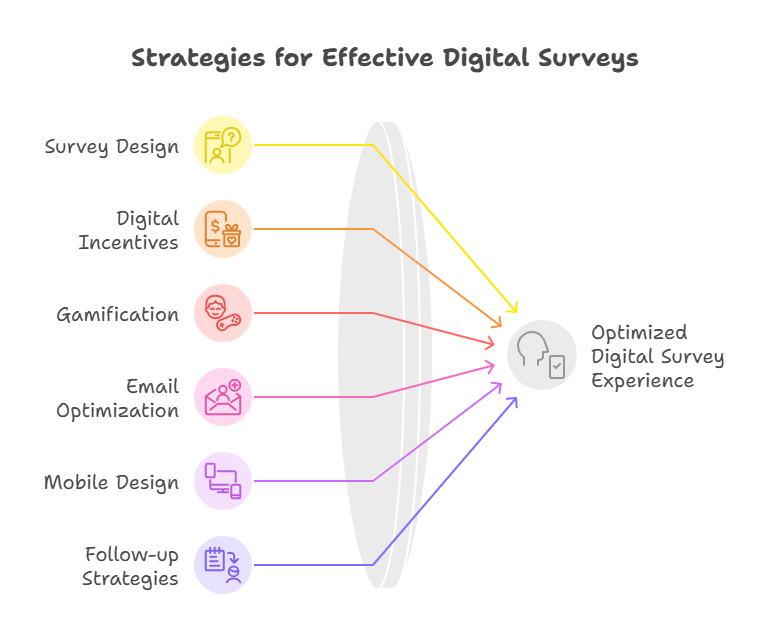
Optimizing Survey Design for Digital Completion
Survey length and structure become even more critical in the digital space. Research shows that online attention spans average around 8 minutes for voluntary tasks. Design your survey to be completed within 5-7 minutes, using clear progress indicators and mobile-responsive layouts. Each question should serve a clear purpose, eliminating any that don't directly contribute to your research objectives.
Leveraging Digital Incentives
Digital rewards prove particularly effective for online surveys. Consider offering e-gift cards, digital vouchers, or points that can be redeemed online. The immediate gratification of digital rewards often drives higher completion rates than traditional incentives. For B2B surveys, offering early access to the research findings or exclusive digital content can be compelling motivators.
Gamification for Enhanced Engagement
Thoughtfully implemented gamification elements can significantly boost survey completion rates. Consider incorporating achievement badges for section completion, point systems tied to response quality, or interactive progress tracking that visualizes the respondent's journey. While powerful, gamification should enhance rather than overshadow your survey's primary purpose, maintaining professionalism while increasing engagement.
Email Invitation Optimization
Your survey invitation email serves as the critical first touchpoint. Craft subject lines that stand out in crowded inboxes while avoiding spam triggers. Personalize the email content using recipient data, and clearly communicate the survey's purpose, length, and reward structure. A/B test different email elements to identify what drives the highest open and click-through rates.
Mobile-First Design Principles
With over 60% of survey responses now coming from mobile devices, mobile optimization is non-negotiable. Ensure your survey platform offers touch-friendly interface elements, automatic resizing for different screen dimensions, minimal typing requirements, quick-loading media elements, and progress saving capabilities.
Smart Follow-up Strategies
Digital platforms enable sophisticated follow-up approaches. Implement automated reminder sequences that adjust timing based on recipient behavior. For instance, send reminders to non-openers after 48 hours, while giving partial completers a different message after 24 hours. Use email analytics to identify optimal sending times for your audience.
Technical Considerations for Response Optimization
Survey Platform Selection
Choose a survey platform that offers advanced branching logic to create personalized paths, automatic save and resume functionality, real-time response validation, cross-device compatibility, and integration with your existing tech stack.
Data Quality Measures
Implement technical safeguards to ensure response quality. This includes preventing multiple submissions from the same IP address, setting minimum time thresholds for completion, including attention check questions, and monitoring response patterns for straight-lining.
Response Rate Calculation and Benchmarking
For online surveys, calculate response rates using this formula:
Track additional metrics specific to online surveys including email open rates, click-through rates, partial completion rates, average completion time, and device type distribution.
Conclusion
Maximizing online survey response rates requires a comprehensive digital strategy that acknowledges modern user behaviors and expectations. By implementing mobile-first design, leveraging digital incentives, and optimizing the technical aspects of survey delivery, organizations can significantly improve their response rates and data quality.
Remember that the digital landscape continuously evolves. Regularly test new approaches and stay informed about emerging best practices in online survey methodology to maintain strong response rates over time.
